In my second year of university, I co-created a 60-second motion graphics film about something most people don't know is happening. Internet Blackouts explores the deliberate shutdown of internet access during conflict and social upheaval — a tool used by governments to silence communication, suppress free speech, and cut communities off from the outside world at exactly the moments when access matters most.
Overview
We debated the direction of the project as a group before landing on War & Crisis as our theme. We felt animation could tell a powerful story in a way a news article couldn't.
It was important for audiences to be educated on the topic, not just gloss over it. In regions affected by conflict, losing internet access means losing contact with family, losing access to safety information, and losing any ability to tell the world what's happening. Most people don't realise this is a deliberate act. The film aimed to change that — and leave viewers with a sense of how they might offer support.
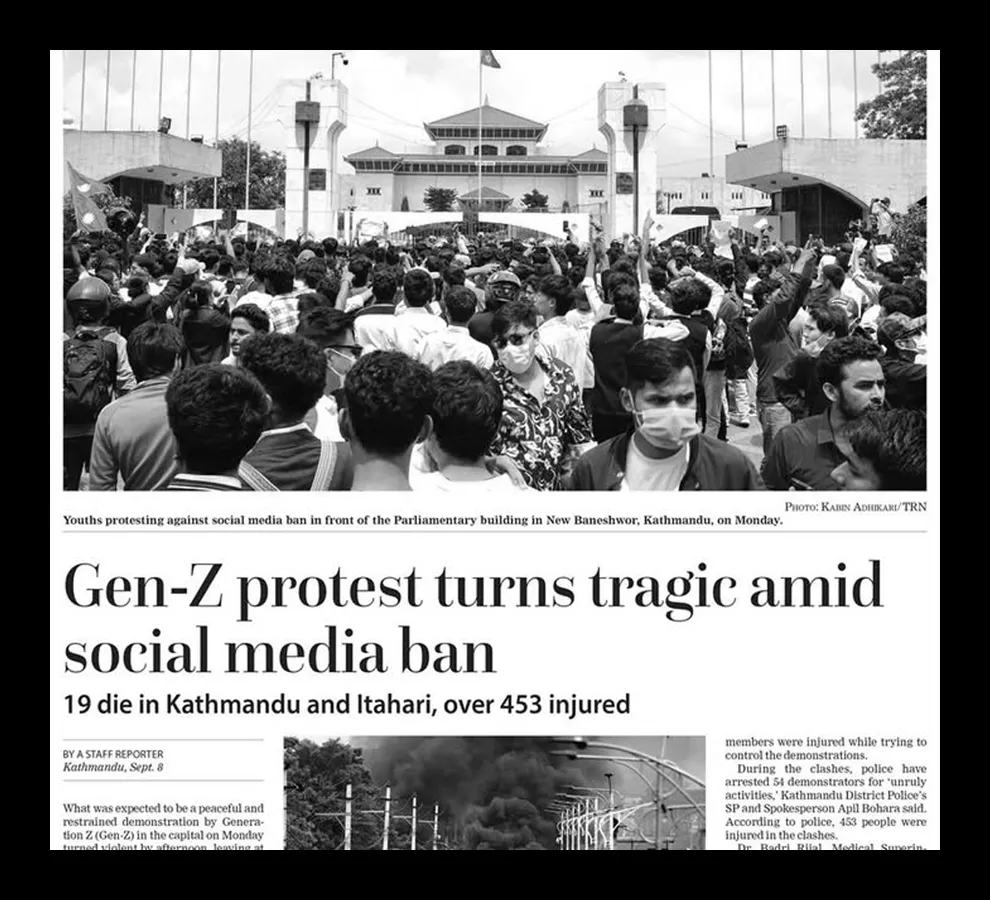
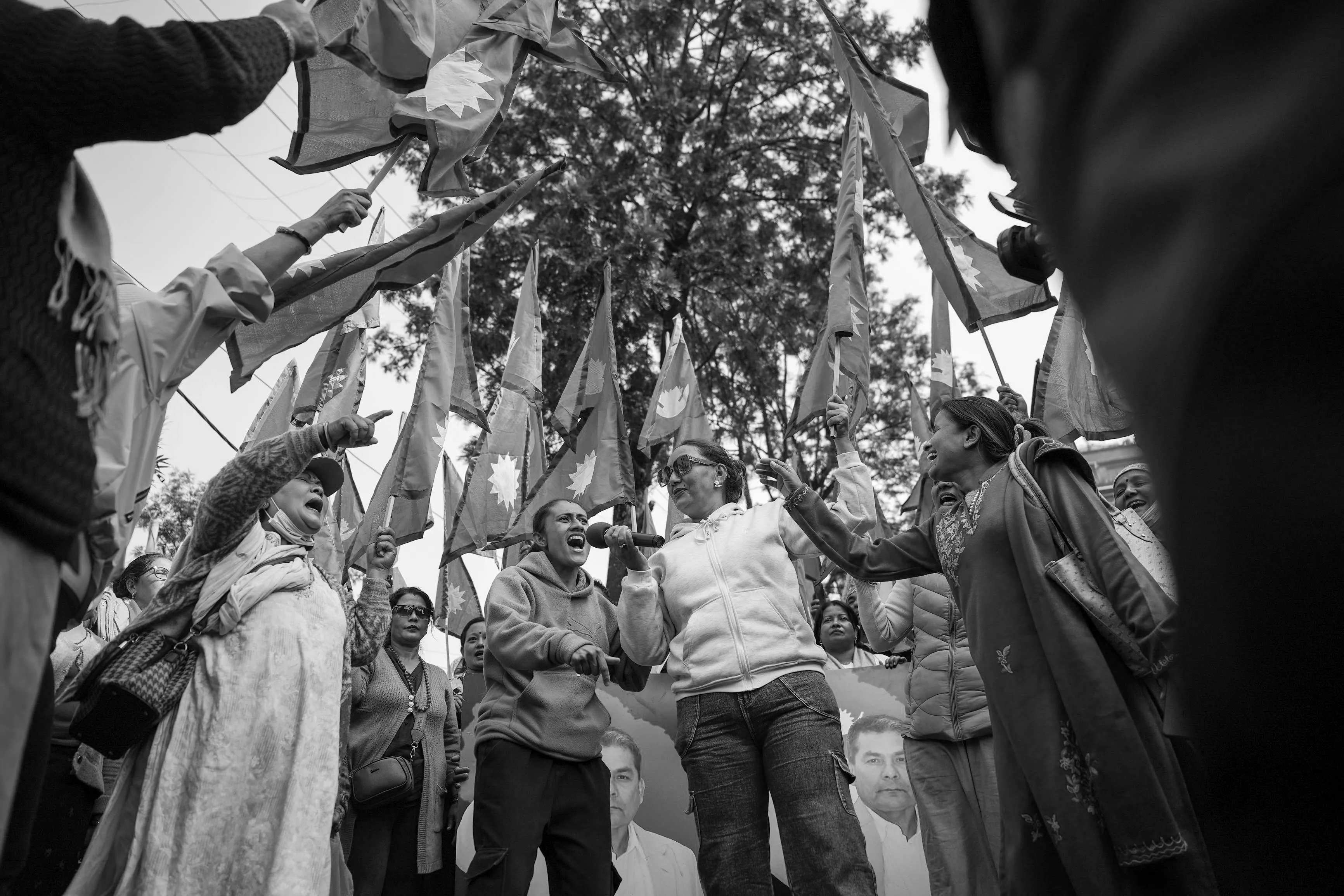
Reference material — news coverage and documentation of internet blackouts in Nepal.
My role
I was responsible for animation, but the work started well before opening After Effects. As a group we worked through several scripts and storyboards during the early stages of development. I wrote the final script and led the storyboarding process — shaping the narrative arc of the film before anyone started making assets.
Nailing the story from the start changed how we approached everything that followed. Every decision felt more intentional because we already knew exactly what each moment was trying to say.
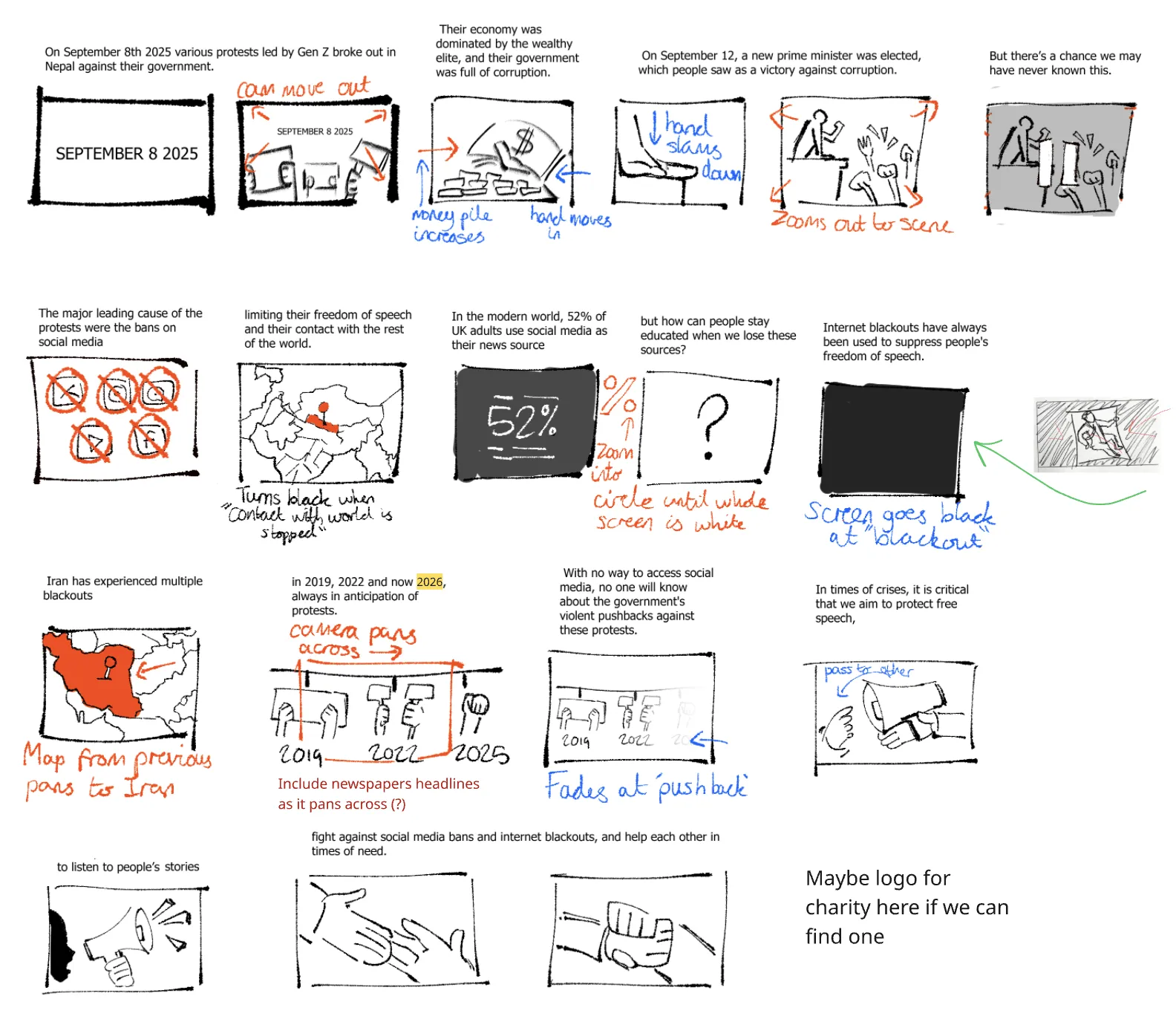
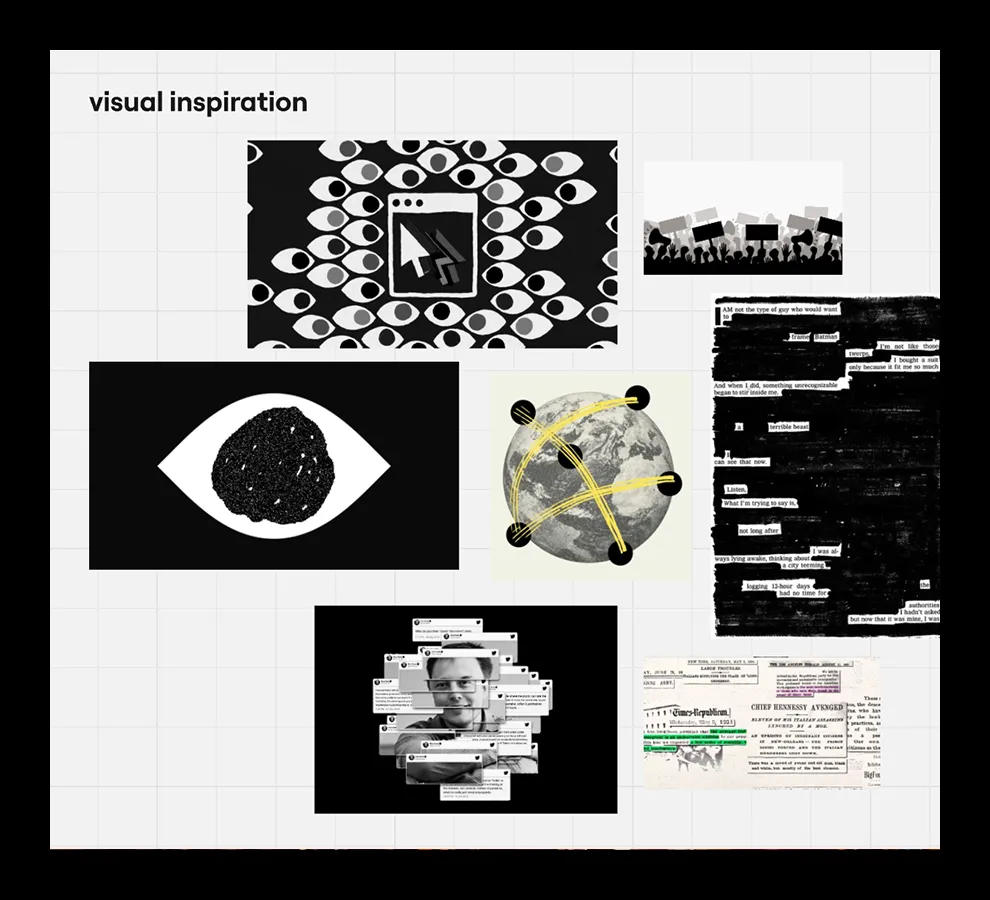
Early storyboard sketches (left) and visual reference gathered during the discovery phase (right).
Script & storyboard
The scripting process went through several rounds before we landed on something everyone felt good about. Getting alignment on the story as a group took longer than expected, but it was worth it. The storyboard was kept deliberately loose — rough sketches, no detail, just enough to visualise the sequence.
Read full script
In today's world, a single post can change everything.
We use the internet to learn, to organise, and to report what's happening around us.
But in moments of crisis, that connection can disappear.
Sometimes without warning... a country goes dark.
These are referred to as "internet blackouts".
Governments cut access to the web, often when they don't want the world to see what's really happening.
It's a tool used to silence dissent.
To make it harder for people to organise protests, share evidence, or call for help.
And when that happens, people lose visibility.
Messages stop sending.
Videos can't upload.
Families are unable to reach each other across borders.
Without reliable information getting out, misinformation can spread unchecked.
And when there's no digital record of things, entire events can be rewritten or erased from history.
That's why access to information matters.
Supporting organisations who fight for open communication helps ensure critical stories don't vanish into the dark.
Because keeping the internet open keeps the truth alive.
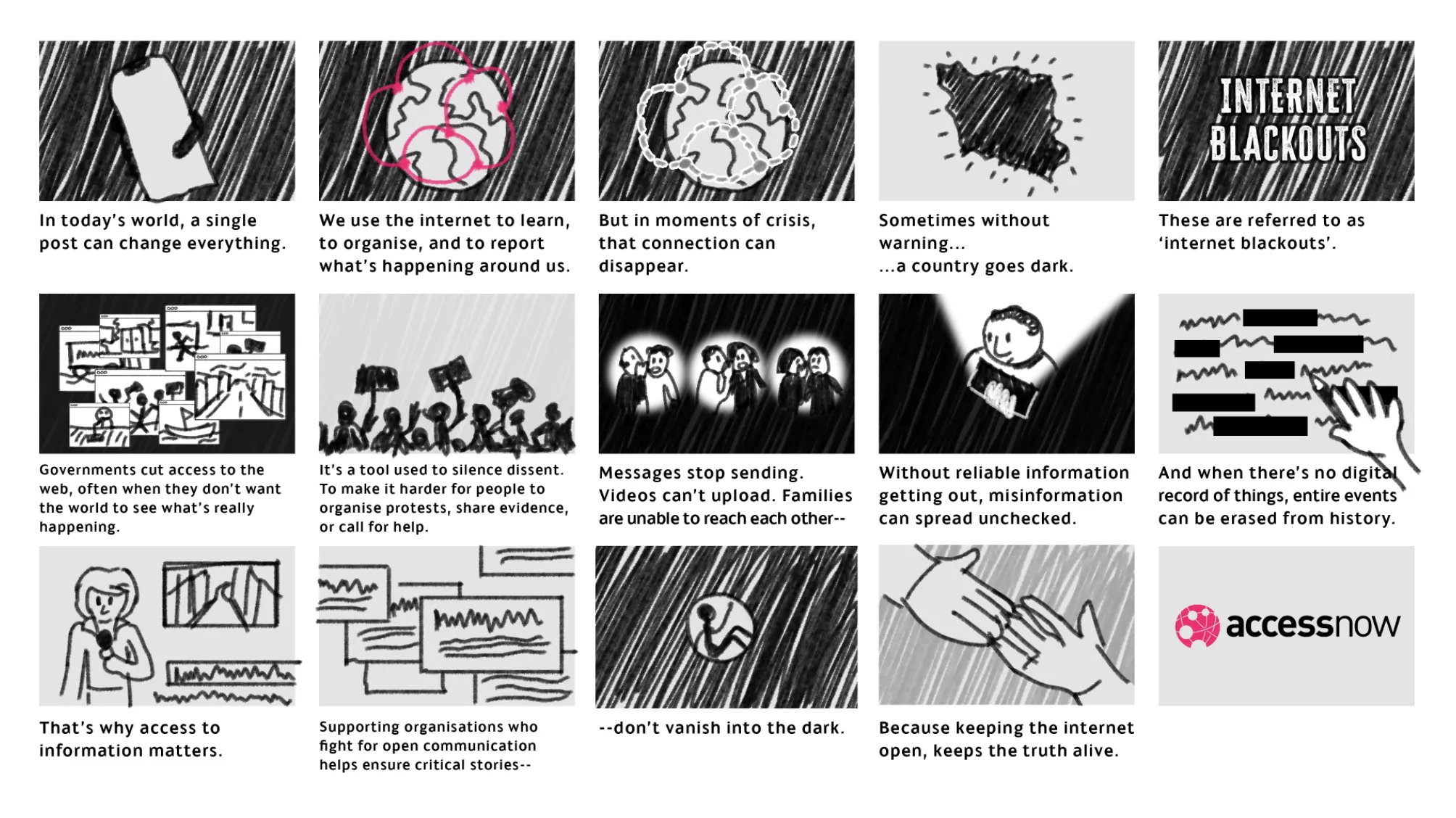
Final storyboard — the complete narrative arc mapped before animation began.
Development
From the storyboard I put together a rough animatic, cutting the boards against unfinished audio to check timings and flow before committing to anything properly.
Animatic — boards cut against early audio to test pacing before full production.
Sixty seconds sounds generous until you're trying to fit a complete narrative arc inside it. Working from Mert's illustrations, I animated each scene trying to find a tempo that felt urgent without becoming exhausting to watch. I also created a Style Guide to maintain consistency across the illustrations and animation as a whole.
Samson handled sound, which made a huge difference to the final product. The same sequence can feel completely flat or genuinely tense depending on what's underneath it — that's not something you fully appreciate until you've seen both versions back to back.
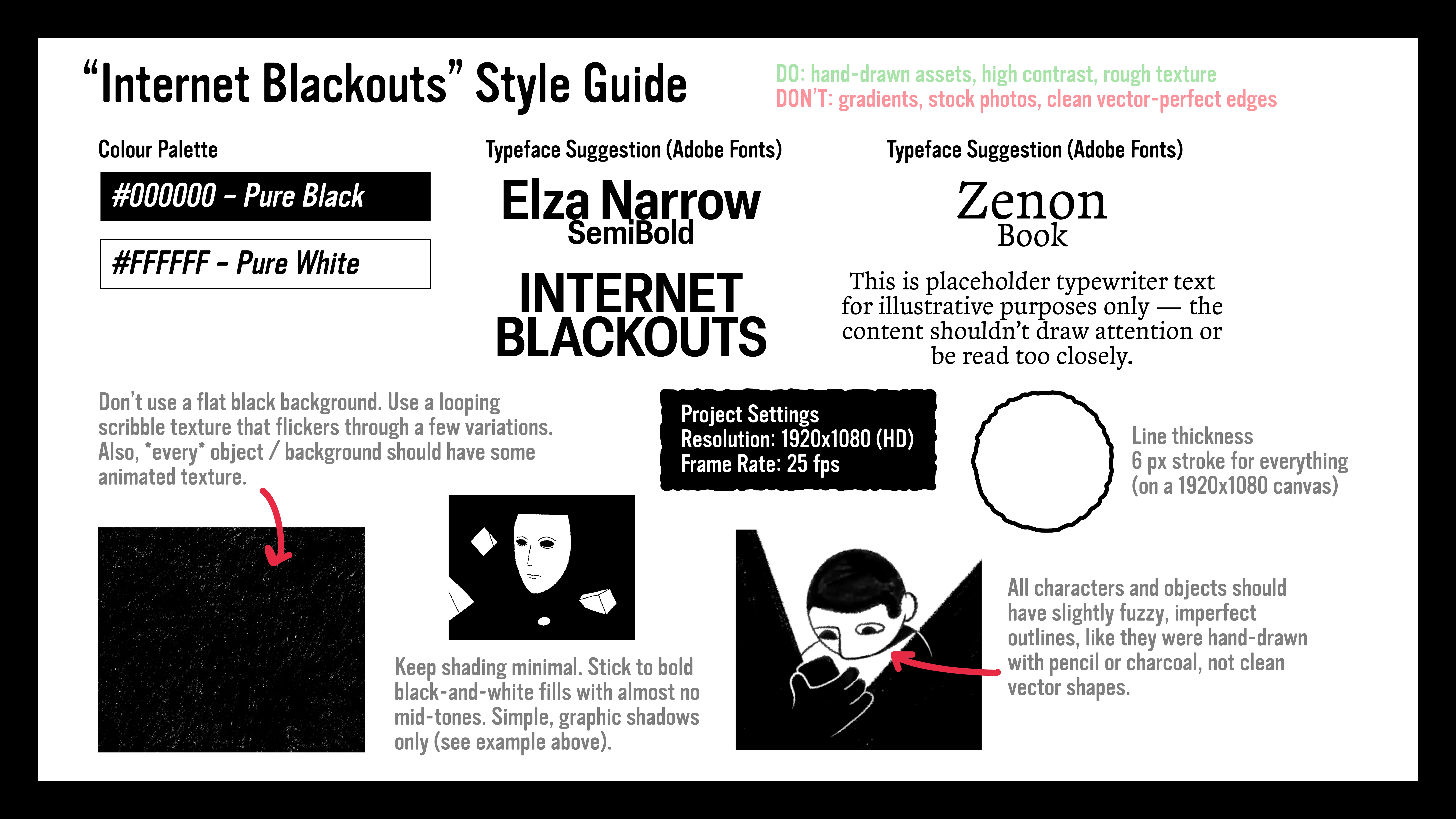
Style guide — created to keep visual consistency across all animated scenes.
A selection of some of the scenes I animated.
What I learned
This was one of the most rewarding projects I've worked on — partly because we truly believed in the importance of the subject matter, and partly because the collaboration was genuinely good. Clear roles, mutual trust, no overlap. When a group project runs like that, the work gets better and the process doesn't grind you down.
The most useful thing the project gave me wasn't a technical skill — it was an understanding of how valuable constraints can be. With only sixty seconds to communicate a complex issue, every idea had to justify its place. That discipline of prioritisation is something I've carried into every project since.
Internet Blackouts — watch again in full.
Notes
- Film made in collaboration with Mert (illustration), Samson (sound), and Reese. Script and animation by Bennett Roberts.
Bibliography
- ---
- ---
- ---